Back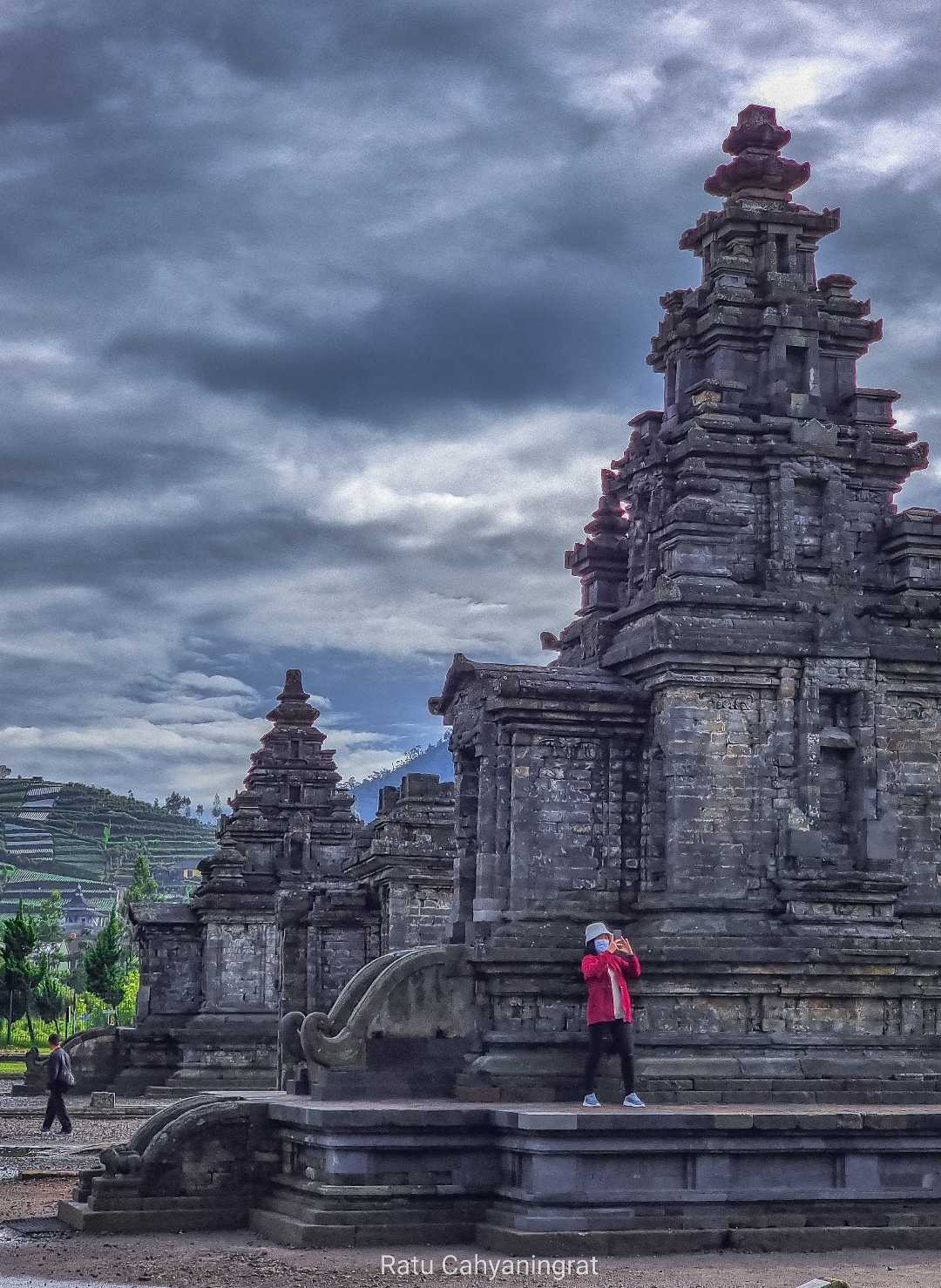

December 16, 2022
CANDI ARJUNA, DIENG, CENTRAL JAVA
📍Kecamatan Batur
Arjuna Temple is a temple left by the ancient Mataram Kingdom with a Hindu Shiva style.
Built around the 7th to 9th centuries, the founder of the Arjuna Temple is thought to have come from the Sanjaya Dynasty from Ancient Mataram.
The location of this temple is in the Dieng Plateau, Banjarnegara Regency, Central Java.
Arjuna Temple is at the very north end of the Arjuna Bathing Complex, and in front of it is Semar Temple, which is thought to be a complementary temple or perwara of this temple.
History of Arjuna Temple
Arjuna Temple was built during the reign of the Sanjaya Dynasty from the Ancient Mataram Kingdom.
This temple is estimated to be the oldest temple in Java. This is evidenced in the inscriptions found around the Arjuna Temple complex, written in 731 Saka or 808 AD.
The history of the construction of this temple is still uncertain in detail, due to the lack of sources found.
The Arjuna Temple was first discovered in 1814 by a Dutch soldier, Thedorf Van Elf. When found, the building was still inundated with water.
Then in the mid-19th century, efforts were made to maintain the temple, which began with draining the water of the lake in Dieng by HC Cornelius from England in 1856.
After that, the maintenance efforts were continued by J Van Kirnsberg from the Netherlands, assisted by the colonial government.
Temple form
has steps to get to the entrance of the temple which is in the west.
The steps are eight in number, with a pencil at the edge with a dragon-headed tip.
At the door of the temple there is a one meter wide viewing booth with a carving of a kalamakara at the top (the entrance decoration functions as an exorcist for evil spirits).
Meanwhile, the roof of the viewing room is shaped like a pyramid house.
In addition, the roof of the Arjuna Temple is shaped like a conical pyramid, but higher.
The pyramid consists of three levels, where each level has a display booth with a smaller size compared to the display booth on the temple wall.
On the inside of the Arjuna Temple there is a space for placing offerings, or what is commonly known as yoni.
The Yoni is rectangular in shape like a table with the top protruding further out.
Functions of the Arjuna Temple
Arjuna Temple serves as a place of worship for the gods, especially Lord Shiva.
The reason is, this construction is specifically for worshiping the Shiva Hindu religion. In addition, the location of the temple on the mountain is related to Hindu beliefs.
Hindus believe that mountains are the abode of the gods. Mountain as a high place is also believed to maximize the time of worship.
Hindus believe that by worshiping in a high place, such as on a mountain, they will be closer to heaven
#pindle
#pindleindonesia
#pindlegemindonesia
#guidebook
#wonderfulindonesia
#mytravelstory2
💬 1 comment
Comments (1)
HERMANDHESDecember 17, 2022
keren mbak saye👏🤩