Back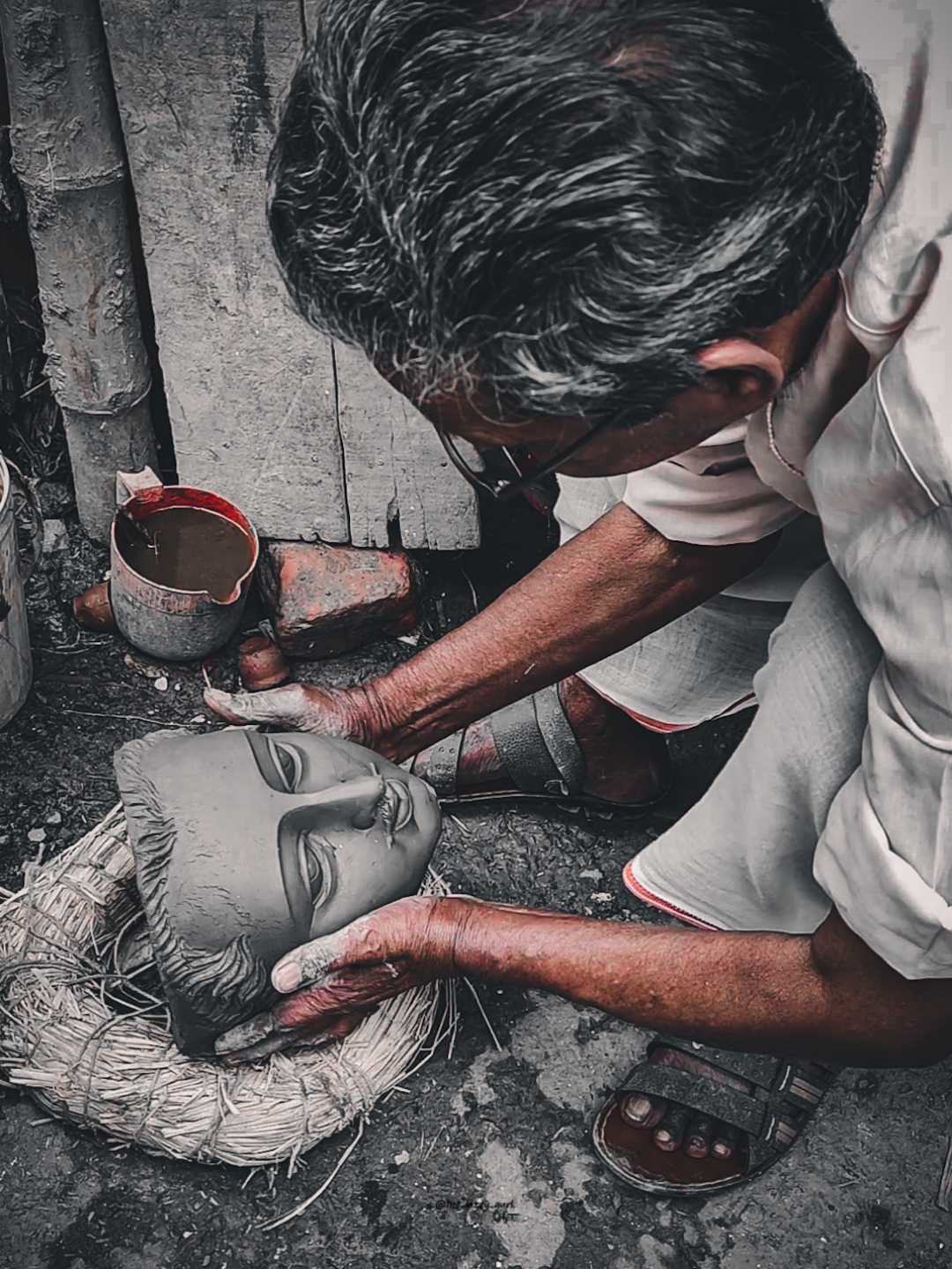
September 23, 2022
kumortuli series
📍Kolkata
Kumortuli (also spelt Kumartuli, or the archaic spelling Coomartolly) is a traditional potters quarter in northern Kolkata, West Bengal, India. The city is renowned for its sculpting prowess. It not only manufactures clay idols for various festivals but also regularly exports them.
The British colonisation of Bengal and India started following the victory of the British East India Company in the Battle of Plassey in 1757. The company decided to build new settlement Fort William at the site of the Gobindapur village. Most of the existing population shifted to Sutanuti. While such neighbourhoods as Jorasanko and Pathuriaghata became the centres of the local rich; there were other areas that were developed simultaneously. The villages of Gobindapur, Sutanuti and Kalikata developed to give rise to the latter day metropolis of Calcutta.
Holwell, under orders from the directors of the British East India Company, allotted "separate districts to the Company’s workmen". These neighbourhoods in the heart of the Indian quarters acquired the work-related names – Suriparah (the place of wine sellers), Collotollah (the place of oil men), Chuttarparah (the place of carpenters), Aheeritollah (cowherd's quarters), Coomartolly (potters' quarters) and so on.
Most of the artisans living in the North Kolkata neighbourhoods dwindled in numbers or even vanished, as they were pushed out of the area in the late nineteenth century by the invasion from Burrabazar. In addition, Marwari businessmen virtually flushed out others from many North Kolkata localities. The potters of Kumortuli, who fashioned the clay from the river beside their home into pots to be sold at Sutanuti Bazar (later Burrabazar), managed to survive in the area. Gradually they took to making the images of gods and goddesses, worshipped in large numbers in the mansions all around and later at community pujas in the city and beyond.
In 1888, one of the 25 newly organized police section houses was located in Kumartuli.
Dhakeswari Mata Temple is a Hindu temple located in Kumortuli, near Sovabazar, Kolkata. It is situated on the eastern bank of the Hooghly River near Kumartolly. The presiding deity of the temple is Devi Durga, which was taken to Kolkata in 1947 from Dhakeswari Temple in Dhaka, Bangladesh.
The idol is 1.5 feet tall and has ten arms, which are mounted on a mythical lion in the form of Katyani Mahishasurmardini Durga. On her two sides are Laxmi, Saraswati, Kartik and Ganesh.
What is Kumartuli famous for?
Kumartuli is a famous locality in Kolkata, known for its traditional potters' quarters. Since the year 1950, the locality has been in the business of sculpting high quality idols of Hindu deities. It is home to several talented potters who toil tirelessly to create clay idols
What is the best time to visit kumartuli?
The best time to visit Kumartuli is couple of months before the Durga Puja, as one can see the incredible skeleton works of Goddess Durga idols.
Kumartuli is open from 24 hours all days in week. No entry fee.
Kumartuli is situated between Rabindra Sarani and the Hooghly River. It is in between the localities of Ahiritola and Shobhabazar. Kumartuli is surrounded by Shyampukur, Bartala, Jorasanko, Jorabagan and Hooghly. Once you’re in Kolkata it’s not that hard to get to Kumartuli.
The locality is easily connected by roads as buses ply right next to Kumartuli. If you want to take a bus get off at Lal Mandir or Rajballavpur Bus Stops from where it’s a five-minute walk
#pindleindia #pindlers #pindleapp #guidebook #durgamaa #kumartuli #thatwiseowl #Meetlocals
💬 0 comments
Comments
No comments yet.