Back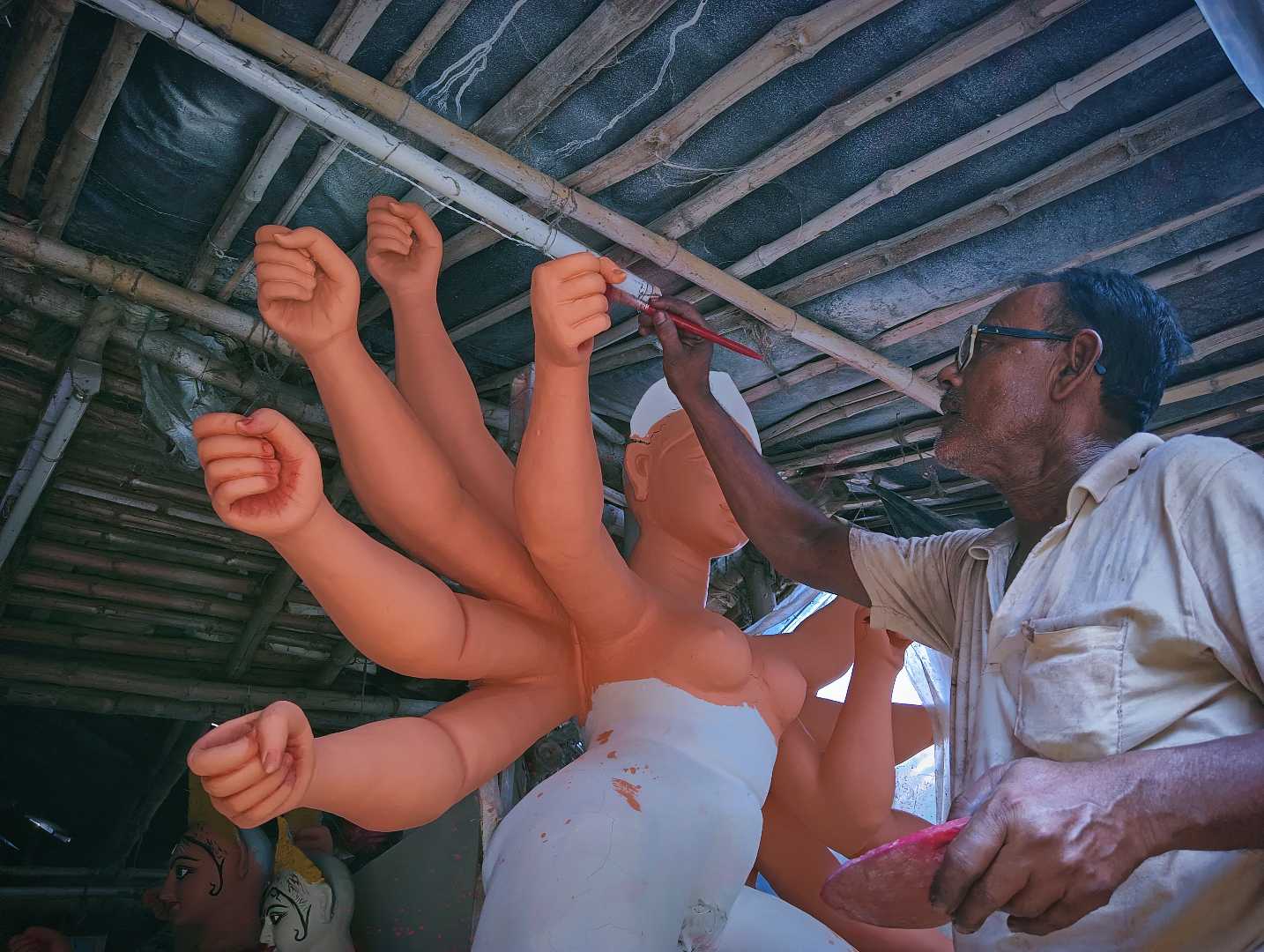 BEST PLACE

BEST PLACEAugust 20, 2022
Artist in Creation
📍Kolkata
Kumortuli: The Unique Tradition of Idol Making in Kolkata
The arrival of kumors was a euphoric feeling, says Amalendu, a member of one of North Kolkata’s elite families, since kumors were symbolic to the approaching festivities. Roy recollects, how he and his siblings used to gape in astonishment the making of Maa Durga, as the deft craftsmen, bit by bit, gave shape to a resplendent, larger-than-life idol from a handful of straw and a lump of clay.
The act of painting the deity’s third eye was the most enchanting part of the entire process, he recounts. Ranjan Babu, the elderly senior artist, would usually gaze at the idol, sometimes for hours, and then, all of a sudden, with one brisk stroke of the brush, it would be there!
Though Kumortuli has been in existence since the inception of the eastern metropolis, its fame as the world’s biggest idol market gained prominence in the era of Sarbojonin Durgotsav or community Durga Puja. This UNESCO World Heritage site, the abode of nearly 400+ idol makers and their families, is nestled in the labyrinths of North Kolkata’s Sovabazar-Bagbazar area, close to river Hooghly.
Filled with the rich smell of wet clay, the essence of Kumortuli is its old world charm, which captivates onlookers as master craftsmen conjure the deity, as if by magic — a century-old legacy, passed on from generation to generation.
History of Kumortuli
‘Kumor’ means potter, and ‘tuli’ means place, so basically, Kumortuli is the potters’ place.
The victory of British East India Company in the Battle of Plassey in 1757, led to the emergence of British colonization of Bengal, following which, the Company decided to develop a new settlement at Gobindapur village, the site, today known as the Fort William.
Most of the local rich and elite Babus shifted to Sutanuti, comprising of Jorasanko and Pathuriaghata, while separate districts were allocated for the working-class population under the supervision of John Zephaniah Holwell, the then Governor of Bengal.
Such districts, which can be easily referred to as ‘old Kolkata’, were assigned work-related names, for instance, ‘Suriparah’ was the place of wine sellers, ‘Collotollah’, the place of oil men, ‘Ahiritola’, the cowherd’s quarters, ‘Chuttarparah’, the place of carpenters, and ‘Kumortuli’, the potters’ quarters.
The potters of Kumortuli, forged clay sourced from the nearby Hooghly River into various potteries, and sold their products at Sutanuti Bazar (modern-day Burrabazar) to earn their living. With the declining demand for earthenware, these potters, with a prowess for creativity, gradually transformed into expert artisans, and took up idol making as their primary profession.
Nowadays, Kumortuli potters, not only manufacture clay idols of gods and goddesses that are worshipped in Indian cities, but they also export the idols on a regular basis for numerous festivals celebrated by Indian communities in foreign countries.
Kumortuli Idols Transcending Geographical Barriers
The demand for Kumortuli’s innovative artwork is ever-increasing, and its supply list is growing at a rapid pace throughout the globe. From Nigeria to Malaysia, Sweden to Johannesburg, Washington DC to London, and the Caribbean Islands, today, Kumortuli’s panoptic clientele of NRIs are spread across in distant lands, including the US, Europe, Asia, Africa, and Australia.
#pindle #pindleguide #kolkata #kolkatarchobiwala #deepayankhatua #gems #pindlegems #mycountry #mytown #guidebook #pindleindia #pindlekorea #pindleturkey #pindleofficial #hiddengems #sharewithpindle #rajeswarirrb #pindleindia #pindleindonesia #guidebook
💬 1 comment
Comments (1)
Nature_lover_jgAugust 23, 2022
🌼🌼🌼