Back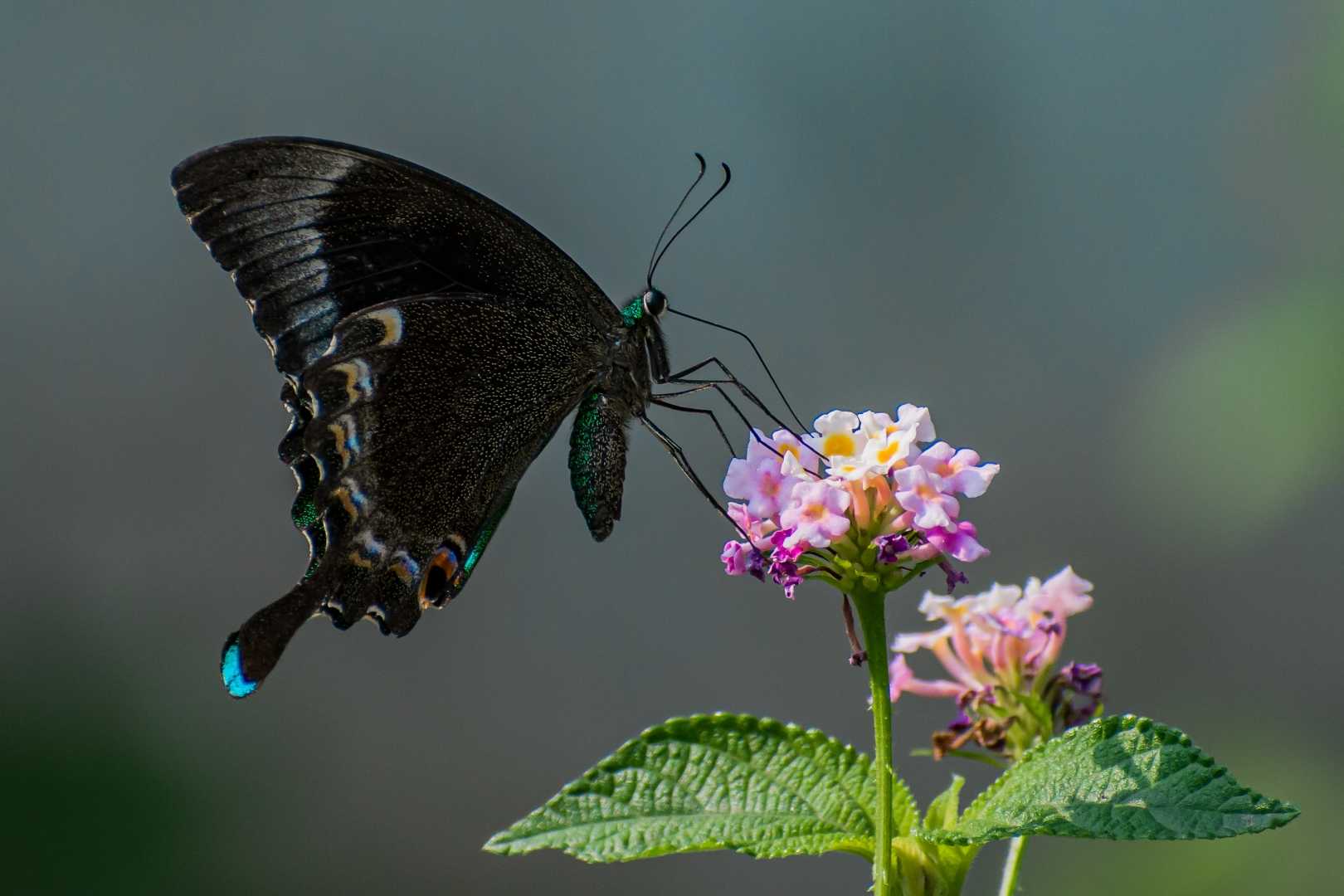 BEST PLACE



BEST PLACEMay 18, 2022
Common Banded Peacock
📍Ketika
This species resembles Papilio palinurus, but the male generally has, on the upperside of the outer half of the forewing, cottony or hairy scent-streaks similar to those in Papilio polyctor, only the streak in interspace 1 is always missing. Other differences are seen in the upper wing. The forewing has the discal transverse bluish-green band slightly sinuous, narrower, more curved than in P. palinurus and more distinctly decreasing in width towards the costal margin; in the female it is more sinuous than in the male. The hindwing has the transverse bluish-green band very variable in width but the inner margin is much straighter than in P. polyctor; this band that in P. polyctor stops short of vein 7, continues to the costal margin, it is however much and abruptly narrowed above vein 7; tornal ocellus claret-red with a large black centre inwardly edged with blue; the bright ochraceous subapical lunule of P. polyctor replaced by a dull whitish spot; the subterminal diffuse green lunules restricted to interspaces 2,3 and 4; the spatular apex of the tail with a small patch of bluish-green scales.
On the underside of the wings the ground colour is dull pale brown to blackish brown irrorated (sprinkled) with scattered yellowish scales, which, however, on the forewing are absent from a large triangular discal patch that lies between the dorsum, the median vein, vein 5 and a line of white lunules that crosses the wing in an outward curve from the upper third of the costa to just before the tornus; these white lunules are outwardly diffuse and merge gradually into the brown ground colour. In the hindwing, the tornal ocellus much as on the upperside; an obscure ill-defined highly arched postdiscal narrow whitish band from above the tornal ocellus to the costa, ends near apex of interspace 7 in a broad white lunule; beyond this a double subterminal row of somewhat straight ochreous-white lunules in the interspaces, each lunule of the inner row bordered outwardly with blue, this bordering very faint in many specimens. Cilia of both forewings and hindwings brown alternated with white. Antennae, head, thorax and abdomen dark brownish black; the head, thorax and abdomen above with a sprinkling of glittering green scales.
The butterfly is solitary and a fast flyer. It flies high above and forages on the trees (e.g., creeper blooms on bamboo). However, occasionally it is attracted to bright flowers of plants on the ground as well (e.g., dwarf red Ixora). It flutters in a hurry while sipping nectar.
It is distinguished due to its colour which is shiny fluorescent blue or green depending on the angle of observation. The magnificent colours are due to scales in interior of its wings. Also there are spots in the bottom of its hindwings similar to eyespots. The exterior of wings is brownish black with patterns similar to eyespots. Perhaps the only protection for this species is self-mimicry through the eyespots as regards to its morphology, considering its bright peacock colours and its fast flight.
#pindleindia #pindlegems #pindleguide #guidebook #pindle #wildsoul #pindlekorea #Mycountry2 #butterfly #peacock #insect #macro #green #colorfulwings #nature
💬 8 comments
Comments (8)
Anaam_farooqMay 18, 2022
🔥🔥
myfavsMay 18, 2022
perfect👌🏻
gulenkubra14May 18, 2022
Great shot 👌🌸
GoodmorningMay 20, 2022
Wawooo amazing shot so beautiful 😍