Back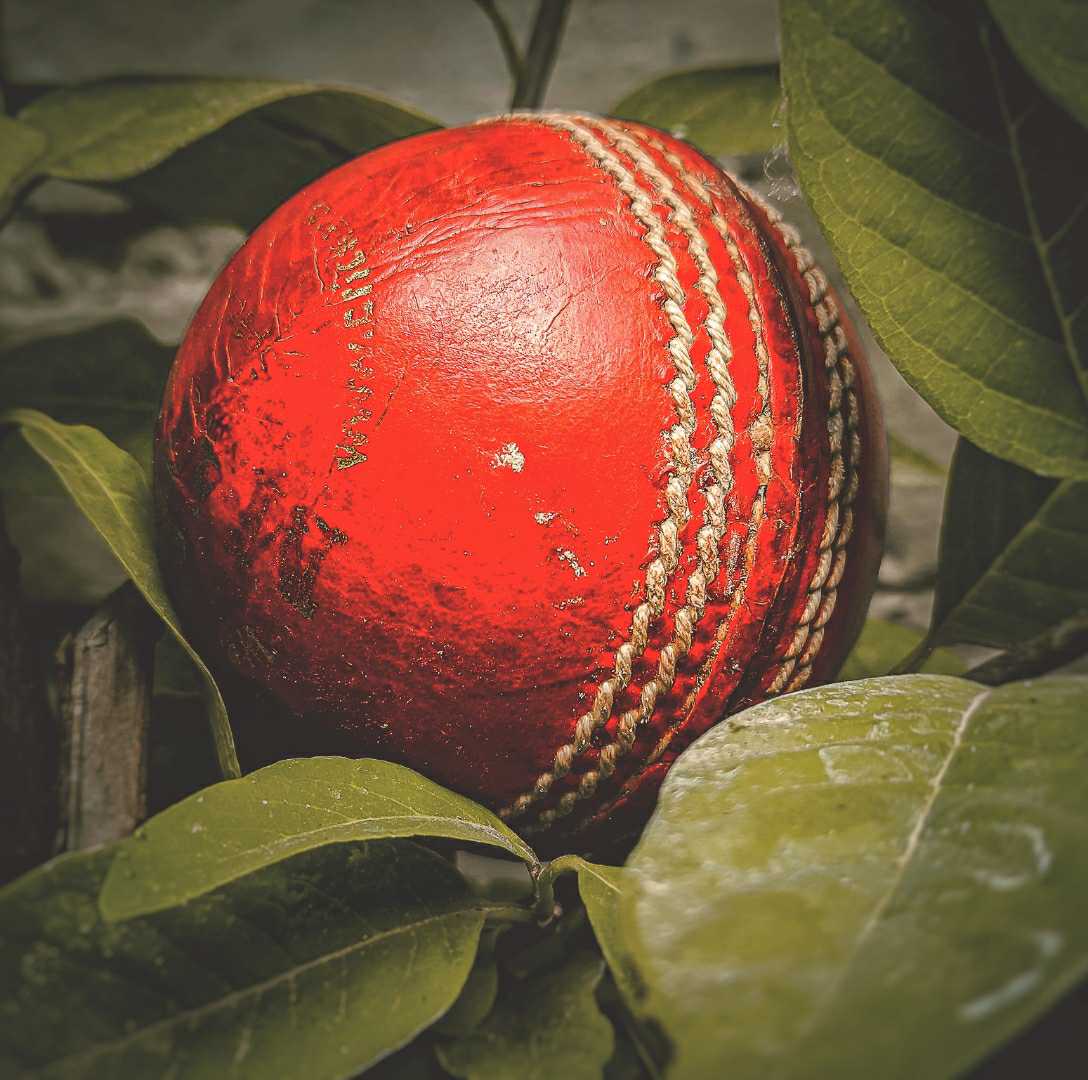

April 27, 2022
CRICKET BALL
📍Lucknow
♦️A cricket ball is a hard, solid ball used to play cricket. A cricket ball consists of a cork core wound with string then a leather cover stitched on, and manufacture is regulated by cricket law at first-class level. The trajectory of a cricket ball when bowled, through movement in the air, and off the ground, is influenced by the action of the bowler and the condition of the ball and the pitch, while working on the cricket ball to obtain optimal condition is a key role of the fielding side. The principal method through which the batsman scores runs is by hitting the ball, with the bat, into a position where it would be safe to take a run, or by directing the ball through or over the boundary. Cricket balls are harder and heavier than baseballs.
In Test cricket, professional domestic games that spread over a multitude of days, and almost the entirety of amateur cricket, the traditional red cricket ball is normally used. In many one day cricket matches, a white ball is used instead in order to remain visible under floodlights, and since 2010, pink has been introduced to contrast with players' white clothing and for improved night visibility during day/night Test matches. Training balls of white, red and pink are also common, and tennis balls and other similar-sized balls can be used for training or informal cricket matches. During cricket matches, the quality of the ball changes to a point where it is no longer usable, and during this decline its properties alter and thus can influence the match. Altering the state of the cricket ball outside the permitted manners designated in the rules of cricket is prohibited during a match, and so-called "ball tampering" has resulted in numerous controversies.
Injuries and fatalities have been caused by cricket balls during matches. The hazards posed by cricket balls were a key motivator for the introduction of protective equipment.
♦️USE:
White balls are used in many limited overs cricket matches, especially those involving floodlights (day/night games). This is because a red ball under yellow floodlights takes on a brownish colour which is very similar to the colour of the pitch.
♦️ Condition of a Cricket Ball
In Test cricket, a new ball is used at the start of each innings in a match. In Limited Over Internationals, two new balls, one from each end, are used at the start of each innings. A cricket ball may not be replaced except under specific conditions described in the Laws of Cricket:
If the ball becomes damaged or lost.
If the condition of the ball is illegally modified by a player.
In Test cricket, after 80 overs, the captain of the bowling side has the option to take a new ball.
The ball is not replaced if it is hit into the crowd - the crowd must return it. If the ball is damaged, lost, or illegally modified, it will be replaced by a used ball in a similar condition to the replaced ball. A new ball can only be used after the specified minimum number of overs have been bowled with the old one.
Because a single ball is used for an extended period of play, its surface wears down and becomes rough. The bowlers may polish it whenever they can, usually by rubbing it on their trousers, producing the characteristic red stain that can often be seen there. However, they will usually only polish one side of the ball, in order to create 'swing' as it travels through the air. They may apply saliva or sweat to the ball as they polish it. The practice of applying saliva has been banned by the ICC during the ongoing COVID-19 pandemic. In a June 2020 press release, the ICC announced that "A team can be issued up to two warnings per innings but repeated use of saliva on the ball will result in a 5-run penalty to the batting side. Whenever saliva is applied to the ball, the umpires will be instructed to clean the ball before play recommences".[19]
The seam of a cricket ball can also be used to produce different trajectories through the air, with the technique known as swing bowling, or to produce sideways movement as it bounces off the pitch, with the technique known as seam bowling.
Since the condition of the cricket ball is crucial to the amount of movement through the air a bowler can produce, the laws governing what players may and may not do to the ball are specific and rigorously enforced. The umpires will inspect the ball frequently during a match. If the ball is out of shape due to normal wear and tear due to batting and ball hitting the pitch, a ball of similar usage and condition will be used as a replacement: e.g. a ball about 30 overs old will be replaced by a ball about the same age.
It is illegal for a player to:
rub any substance apart from saliva or sweat onto the ball
rub the ball on the ground
scuff the ball with any rough object, including the fingernails
pick at or lift the seam of the ball.
apply saliva on the ball (ongoing due to the COVID-19 pandemic)
Despite these rules, it can be tempting for players to gain an advantage by breaking them. There have been a handful of incidents of so-called ball tampering at the highest levels of cricket.
A new cricket ball is harder than a worn one and is preferred by fast bowlers because of the speed and bounce of the ball off the pitch. Older balls tend to spin more as the roughness grips the pitch more when the ball bounces, so spin bowlers prefer to use a worn ball, though a ball of about 8–10 overs old is still useful to a spinner as it can get more drift in the air. Uneven wear on older balls may also make reverse swing possible. A captain may delay the request for a new ball if they prefer to have spin bowlers operating but usually asks for the new ball soon after it becomes available.
#pindle
#pindlegem
#pindleguide
#cricket
#MyCountry2
💬 0 comments
Comments
No comments yet.